South Island Road Trip Planner: Build Your Dream New Zealand Self‑Drive Itinerary in Minutes
South Island Road Trip Planner
You can read about what our South Island Road Trip Planner does if you scroll down the page. You can also use it for your North Island self-drive road trip plans.
But we figure it might just be better to show you it up front:
New Zealand Road Trip Planner — Plan Your North & South Island Trip
Printed from New Zealand Road Trip Planner. For a polished PDF with a route map, use the "Save / Print PDF" button on the page instead of your browser's print function.
Get OrientedRead the orientation guide below, or consider basing yourself in one or two hub cities instead. Still deciding between a car and a campervan? Get some help just below that — then choose North Island, South Island, or Both.
2
Build Your TripBrowse "Learn About Each Location" if you want a closer look at a place first, then set your travel style, season & dates and pick a suggested itinerary, choose your own start, finish & length, or let us plan it for you
3
Your Trip DetailsRun a free Trip Health Check for a one-click pacing, fuel-gap & route-warning summary, check your fuel & budget estimates, and sort your Must Book bookings and packing list
4
Your ItineraryAdd hotels, activities & notes to each day, then save, print or share your itinerary — and book your rental car or campervan (see Step 1 if you're still deciding between the two), ideally well ahead of your trip
1
Get Oriented
Decide your vehicle, then choose North Island, South Island, or Both
▼
New to New Zealand? Start here
North Island
More compact, shorter drives between stops. Geothermal wonders and Māori culture around Rotorua, the winelands and craft scene of Wellington, beaches and dolphins at the Bay of Islands, volcanic hiking and Hobbiton near Tongariro.
South Island
Bigger distances, bigger scenery. Milford Sound and Fiordland, the glaciers and rugged coast of the West Coast, golden beaches at Abel Tasman, and Queenstown as the adventure and lakes hub, with Wanaka nearby.
How long do you need? One island, done properly: 14 days minimum. Both islands, without rushing: 24 days minimum. Your first and last days are mostly travel, not sightseeing — build that in, don't count on them for touring. With less time than that, basing yourself in one or two hub cities and day-tripping out (see below) can still work well, since it trades road-trip transit for short local drives or a domestic flight.
Our honest take: unless you have 3+ weeks, most first-time visitors have a better trip focusing on one island, at a relaxed pace, rather than rushing both.
Rather than moving hotels every night, you can stay put in one hub city and take day trips out — no packing up, no long driving days, and it genuinely suits a first trip well if you're tight on time. New Zealand's domestic flight network also connects the main centres well, so you can combine two hubs that aren't near each other by road (for example, a week based in Auckland, then a short flight to Queenstown for a second week there) without ever driving the length of the country.
🚐 Car Hire vs Campervan — Which suits your NZ adventure?
Personalised cost comparison including live fuel price calculations
Your Trip Details
⛽ Fuel Calculator
Defaults updated April 2026
2,000 km
⛽ Fuel Price per Litre — choose a preset or type your own
NZ$/L
💡 Check prices at Z Energy, BP, or Mobil, or use the Gaspy app to find the cheapest fuel near you. Remote South Island areas (Milford Sound road, West Coast, Far North) can be 40–60¢/litre above city prices.
Car fuel est: —
Campervan fuel est: —
Car cost per km: —
Extra campervan fuel: —
Accommodation & Style
About You & Your Group
✓ Our recommendation for your trip
Car Hire + Accommodation
Campervan / Motorhome
⚠️ Winter Driving Conditions — Important Information
📅 Peak Season — Book Well Ahead
Key factors for your trip
Practical tips
▲Travel insurance is strongly recommended for all visitors to New Zealand. Before you travel, check that your policy includes adequate cover for your hire vehicle's damage excess — rental vehicle excess amounts can be significant (often NZ$2,000–$5,000 or more), and not all travel insurance policies cover this automatically. Consider purchasing a standalone rental vehicle excess insurance policy if your travel insurance does not provide sufficient cover.
Disclaimer: All cost estimates shown are in NZD and are provided as a general guide only, based on market averages for the 2025/26 season. Actual costs will vary depending on your specific vehicle, operator, availability, and travel dates. Fuel calculations are estimates based on the consumption figures and fuel price selected — real-world usage will differ. We make no representation as to the accuracy or completeness of the information provided, and we accept no liability for any loss or expense arising from reliance on these estimates. You should independently verify all costs before making any booking or financial decision. Affiliate disclosure: We may receive a small commission if you make a booking through the partner links on this page (Booking.com and DriveNow). This is at no extra cost to you, and our recommendations are not influenced by these arrangements.
Estimates in NZD. Fuel cost = your selected vehicle consumption × your chosen fuel price × distance. Rental and accommodation figures are 2025/26 market averages — actual costs vary by operator, season, and availability. We may earn a commission from bookings via our partner links.
Freedom camping is legal, but only where councils allow it — some areas are open to all vehicles, some are restricted to certified self-contained vehicles only, and some ban overnight camping entirely. Rules are set by each district council, so they vary as you travel.
The old Blue Warrant no longer counts. As of 7 June 2026, New Zealand's self-containment certification moved fully to a Green Warrant system under the Self-Contained Motor Vehicles Legislation Act 2023. A vehicle now needs a permanently fixed toilet (a portable toilet alone no longer qualifies) and enough fresh/waste water capacity, certified by an accredited inspector through the Plumbers, Gasfitters and Drainlayers Board.
Check what your rental actually has. Most reputable rental campervans are self-contained, but certification can lapse or vary by vehicle — ask your rental company directly whether your specific van carries a current Green Warrant before relying on it for restricted sites.
Fines are real and enforced. Freedom camping without valid certification where it's required can result in an infringement fine — reported penalties vary by council but commonly run from around $200 up to $1,000 or more. It's not worth the risk to save a night's camp fee.
Find legal spots as you go rather than guessing — apps like CamperMate and Rankers, and the NZMCA site directory, show which sites accept which certification and are kept up to date as rules change.
Want something cheaper and more scenic than a holiday park, without freedom camping? DOC runs 300+ conservation campsites in forest, lakeside and beach settings around the country — most cost $0–$15/night, though facilities are more basic (think long-drop toilets rather than powered sites and hot showers).
Prefer power, hot showers and a guaranteed site over freedom camping? Holiday parks are the reliable paid alternative — most have powered sites for any campervan or motorhome, whether or not it's self-contained.
Some roads are off-limits to rental campervans entirely, regardless of freedom camping rules — commonly Skippers Canyon Road and the road to Macetown (both near Queenstown), Ball Hut Road (Aoraki/Mt Cook), the Crown Range Road (Queenstown–Wanaka), and Ninety Mile Beach/Te Paki Stream (Northland). These are standard exclusions in most rental agreements — always check yours before detouring.
General information only, not legal advice — rules and fine amounts vary by council and can change. Always check current signage and official sources (e.g. nzmca.org.nz) before you camp.
Both islands, without rushing, generally needs 24+ days (see the guide above) — New Zealand is bigger, and slower to drive, than it looks on a map. With less than that, consider focusing on one island instead, flying between two regional bases, or combining two shorter single-island itineraries (see Suggested Itineraries below).
2
Build Your Trip
Explore places, set your travel style, then choose how you want to plan
▼
Not sure what a place is actually like? Pick a destination to see photos, things to do, and where it sits on the map — no need to add it to your trip yet. Not sure where to start? Each list opens with a Highlights group of well-known, widely-visited destinations.
All Family Adventure Relaxed Couples Budget
Enter the New Zealand date that your trip starts (not the date in your home location). If you are flying in from overseas, this is your New Zealand arrival date, not the date you depart home. In New Zealand, dates are expressed as day/month/year.
1Option 1: Pick a Suggested Itinerary
Not sure where to start? Pick one of these popular routes and load it into the planner with one click — this builds your full day-by-day itinerary right away, no need to click Create Trip afterwards.
All TripsEasy paceModerate paceFast-paced
Easy pace easy drives & multi-night stays • Moderate pace a typical mix • Fast-paced long drives and/or moving most nights
OR
2Option 2: Create Your Own Itinerary Below
Remember: your first and last days are mostly arrival/departure travel, not sightseeing -- they still count toward your total.
Each day below is one night. Staying 3 nights in one place? Count it as 3 days for that stop — you'll set the same destination for each of those days, and can pick different hotels or activities for each night if you like.
Looks good — hit Create Trip below to build your day-by-day itinerary.
Click once you've set your Start, Finish & Trip Length above.
OR
3Option 3: Let Us Plan It For You
Remember: your first and last days are mostly arrival/departure travel, not sightseeing -- they still count toward your total.
Typical car: 7-9. Campervan/motorhome: 9-18 depending on size — check your rental's specs.
Create a trip above to see your estimated fuel cost.
Trip Summary
Easy pace easy drives & multi-night stays • Moderate pace a typical mix • Fast-paced long drives and/or moving most nights
Useful Tools & Bookings
Check your licence is legally valid to drive here. Most visitors can drive on their current overseas licence for up to 18 months from arrival (12 months for a motorcycle/truck licence). If it isn't printed in English, you'll also need an International Driving Permit (IDP) or an approved translation — arranged before you arrive, since you can't apply for one once you're in New Zealand. Full legal requirements on NZTA's site ›
Renting a car or campervan has its own separate requirements — set by the rental company, not the government, so being legally allowed to drive doesn't automatically mean a company will rent to you. Most require a full, unrestricted licence held for at least 12 months (learner or restricted licences usually aren't accepted), a minimum age of 21 (sometimes higher for campervans), and often charge a young-driver surcharge under 25. These vary by company, so always check the specific terms with whoever you book with.
We drive on the left — the opposite side to the US, Canada or most of Europe. Give yourself a day or two to adjust before tackling mountain passes.
One-lane bridges are common — a sign shows who has the right of way; if it's not you, stop and let oncoming traffic through.
Distance ≠ time. NZ's roads are winding and often mountainous — 100km can easily take 2 hours. Always plan by drive time, not distance (this planner's drive badges do this for you).
Give-way rules changed in 2012, and it still trips people up — if you're turning left, oncoming traffic turning right must now give way to you (not the other way around). If you're turning right, you give way to oncoming traffic going straight through or turning left. Full give-way rules on NZTA's site ›
Roundabouts are everywhere and work differently to a 4-way stop. You always enter and travel clockwise, and give way to any traffic already on the roundabout coming from your right. Don't signal when going straight ahead; signal left just before your exit.
If traffic is banking up behind you, pull over and let it pass. This isn't just courtesy — NZTA's official road code says you must be considerate of vehicles behind you and pull over as soon as it's safe to. New Zealand builds passing lanes and slow vehicle bays for exactly this on winding rural roads; watch for the signs, and don't speed up on straights to stop someone passing.
Sheep or cattle on the road are a genuine possibility on rural routes. Slow right down, follow any instructions from the farmer or their dogs, and never honk — it startles the animals and won't win you any friends. If it's dark, dip your lights and edge forward slowly; they'll move to the verge on their own.
Some roads are unsealed (gravel) — drive slower and check your rental's terms before heading down one.
Drink-driving limits are strict and age-based. For drivers 20 and over, the legal limit is 250 micrograms of alcohol per litre of breath (50mg per 100ml of blood) — noticeably lower than many countries. For drivers under 20, the limit is zero: any detectable alcohol at all is an offence.
A few roads are toll roads — all electronic, no booths. New Zealand has three toll roads, all on the North Island (Northern Gateway Toll Road north of Auckland, Tauranga Eastern Link, and Takitimu Drive in Tauranga). Cameras record your plate automatically; you pay online afterwards — as the renter, you're responsible for it, and your rental company will charge an admin fee on top if it's left unpaid. Pay a toll or check current rates on NZTA's site ›
Visa or NZeTA — check before you book. Most visitors need either a visitor visa or a New Zealand Electronic Travel Authority (NZeTA) to enter — even travellers from visa-waiver countries usually still need an NZeTA. Most applicants also pay a separate International Visitor Levy (IVL, NZD $100 per person, non-refundable) in the same transaction — budget for it as part of your entry costs, not just the NZeTA fee itself. Exactly what you need depends on your passport and can change, so don't rely on general advice here: use Immigration New Zealand's official tool to check what applies to you, well before you travel. Check if you need a visa or NZeTA ›
Emergency number: 111 (Police, Fire, Ambulance) — this is New Zealand's equivalent of 911 (US/Canada), 999 (UK) or 112 (EU). It's free to call from any phone, including with no credit or signal bars showing, as long as there's some network coverage.
Vehicle breakdown: call the roadside assistance number on your rental agreement or the tag on your keys first — most NZ rental companies include 24/7 breakdown cover. Pull as far off the road as you safely can, turn on hazard lights, and stay well clear of moving traffic, especially on narrow rural roads.
After a crash: if anyone's injured, call 111 immediately. Exchange names, contact details and insurance/rental info with the other driver. By law you must report the crash to Police within 24 hours if someone's injured or you can't exchange details with the other party. Contact your rental company as soon as it's safe to.
Arriving in NZ — biosecurity declarations: every visitor must complete a free New Zealand Traveller Declaration (NZTD) before or on arrival, declaring food, plant/animal products, and any used outdoor, hiking or camping gear (even if it looks clean). Failing to declare a risk item — even by accident — carries an instant NZD $400 fine. If in doubt, declare it or use an amnesty bin; there's no penalty for declaring, only for not declaring. Full details on MPI's site ›
Tipping isn't expected. Unlike the US, there's no tipping culture in NZ — service staff are paid at least minimum wage, and prices already include what you pay. A tip for outstanding service is appreciated but never required or assumed.
Get connected before you head to remote areas. An NZ SIM or eSIM (available at the airport or online before you arrive) is worth sorting early — this planner already flags the areas with little to no signal (Milford Sound, Haast Pass, Stewart Island and others), so download any offline maps or documents you'll need before you lose coverage.
Sort your travel insurance before you go — and check it covers your rental vehicle excess too. New Zealand's ACC scheme covers accident-related injury treatment for visitors while you're here, but it doesn't cover illness, ongoing treatment once you leave NZ, medical evacuation, or getting you home if something serious happens — which is exactly what travel insurance is for.
Explore New Zealand Tours & Activities
Not seeing tours below? Just refresh your browser.
Enter your estimated costs in NZD. Amounts are saved automatically.
Rates are approximate.
Most activity prices are per person — enter your group's total.
NZ$0
Total Trip (NZD)
NZ$0
Per Day (NZD)
NZ$0
Per Person (NZD)
A$0
Total Trip (AUD ~)
A$0
Per Day (AUD ~)
🗓️ Season Overview for Your Route
At-a-glance season ratings for every destination on your trip.
Key:PeakGreatShoulderQuiet
The admin side of a NZ trip — sort these before you fly, not after you land. This list is about you, not your itinerary, so it stays ticked no matter how many times you rebuild your trip below.
Popular New Zealand experiences that sell out weeks ahead — check which ones apply to your route and book early. Most book through GetYourGuide; Great Walks book directly through the Department of Conservation (or, for the Hump Ridge Track, its own trust) — either way, "Book Now" takes you to the right place.
Based on your destinations — items are tailored to your route.
4
Your Itinerary
Day by day — add hotels, activities & notes for each stop
▼
Map: All destinations (hover to explore) Your trip stops
🏨 Accommodation
1
Click Search Hotels on Expedia to find your perfect accommodation for that day.
2
Copy the full URL from your browser's address bar and paste it into the field below the button. This adds your choice to that day's itinerary (no booking is made at this stage). Remove it any time with the "×" next to its name.
3
Ready to book? Click Book Now next to your saved choice to return to that exact Expedia page. Bookings are made directly with Expedia and are subject to their terms and conditions.
4
Staying multiple nights in the same place? Add your hotel once and it's automatically applied to every night of that stay. Prefer a different hotel for part of the stay? Just remove it with the "×" on the nights it shouldn't apply to.
🎟️ Activities
1
See something in a day's Suggested Activities you like? Click its Quick Add button to save it instantly.
2
Want more options? Click Find [Vibe] things to do for activities matching your travel style, or Search Activities on GetYourGuide to search more broadly. Either opens GetYourGuide in a new tab — copy the specific tour's page URL and paste it into the field below to add it here.
3
Ready to book? Click Book Now next to your saved activity to return to that exact GetYourGuide page. Bookings are made directly with GetYourGuide and are subject to their terms and conditions.
4
Unlike accommodation, activities are added to that single day only — even during a multi-night stay, add your activities separately to each day you'd like them on.
Notes
1
Each day has its own Notes field at the bottom of the card — use it for reminders like check-in times, bookings still to make, or packing notes specific to that stop.
2
Notes are saved automatically as you type and are included when you save or print your trip as a PDF.
* Using links on this site may earn us a small commission at no extra cost to you.
Share Your Trip
Send your itinerary link to friends, family or your travel group.
ⓘ Facebook may shorten long links. Email includes your full day-by-day itinerary in the message, not just a link.
Reset this trip?
This clears every day, hotel, activity and note you've added and can't be undone. If you want to keep a copy, use "Restore Saved Trip" to save it as a named slot first.
Trip Health Check
Rebuild this trip?
Creating the trip again will clear every hotel, activity and note you've already added on each day. If you want to keep a copy first, close this and use "Restore Saved Trip" to save it as a named slot.
Saved Trips
Save the trip you're building now under a name, or restore a trip you saved earlier.
Three ways to build your trip — pick whichever suits you
Option 1: Pick a Suggested Itinerary — choose from a set of ready-made routes if you'd rather start from
something proven than a blank page.
Option 2: Create Your Own Itinerary — set your start point, finish point and trip length, then choose
each day's destination yourself.
Option 3: Let Us Plan It For You — tell us your interests, travel style and how many days you have,
and we'll put a realistic route together for you to fine-tune.
Our South Island Road Trip Planner helps you research and plan your New
Zealand South Island road trip, in one, easy-to-use tool.
Building a
South Island self-drive itinerary sounds exciting. But an information overload
can lead to confusion.
what's the best route?
when should we go?
what type of car or campervan do we need?
where should we stay?
what activities are best?
should we pre-book anything?
what about road conditions and travel times?
how much will our South Island self-drive
holiday cost?
So to make
things easier, we created the South Island Road Trip Planner.
This
easy-to-use tool helps you build a realistic New Zealand South Island
itinerary, organise your bookings, and create a clear plan you can save, print,
or share.
Plan your travel route
use one of our suggested itineraries as a
starting point, build your own from your start and finish points, or let us
plan it for you based on your interests and available time.
your chosen route is updated on the map with
driving times included.
choose your travel season (or your exact
travel dates) and receive tips and a realistic pace rating for every location
on your route.
Find your transport
use the built in link to research and book your car, campervan or motorhome, at market leading rates.
calculate fuel costs.
find EV charging locations.
Accommodation and things to do
search for accommodation and activities for each location and add these to your itinerary as you go.
use our "Top Picks" for each destination for inspiration, and add any of these to your itinerary.
follow the links provided to book and secure your chosen accommodation and activities (really helpful in peak seasons).
How much will your trip cost?
use the Budget Tracker to keep track of approximate costs.
But wait there's more - your South Island Road Trip Planner also gives you:
a detailed packing list tailored to each stop
on your route — closed-toe shoes for Rotorua-style geothermal walks,
seasickness tablets for Milford Sound and Fiordland, sandfly repellent for the
West Coast and Stewart Island — the list adjusts automatically to what's
actually on your itinerary.
guidance on things that may need to be booked
early.
dining discounts for meals.
a way to remember your New Zealand adventure
through a premium New Zealand photo book service.
Save, print and share your South Island road trip planner itinerary
it's easy to save, print and share your itinerary using the buttons in the planner.
saved trips can be "restored".
Who is our South Island Road Trip Planner for?
The South Island Road Trip Planner is ideal for:
first-time visitors to New Zealand’s South Island.
travellers comparing South Island itinerary ideas.
couples, families, and groups planning a self-drive holiday.
anyone wanting a printable and shareable South Island travel itinerary.
anyone combining the South Island with a North
Island leg in the same trip.
South Island Road Trip Planner FAQs
Is this good for first-time visitors?
Yes. It is
designed to make planning a South Island road trip easier, even if you have
never been before — and if you're not sure where to start, our suggested
itineraries or "Let Us Plan It For You" option will build a realistic
route for you.
Can I use it for different trip lengths?
Yes. You can create a short South Island itinerary or a longer New Zealand self-drive holiday plan.
Do I have to book through the links?
No. The booking links are optional and included for convenience.
Can I share my itinerary?
Yes. You can generate a PDF itinerary to save, print, or share.
Can I use this to plan the North Island too?
Yes. The same
planner covers the whole country — choose North Island, South Island, or both
when you start.
Ready to plan your New Zealand South Island road trip?
Use the South Island Road Trip Planner above to build a realistic, organised, and bookable self-drive itinerary.
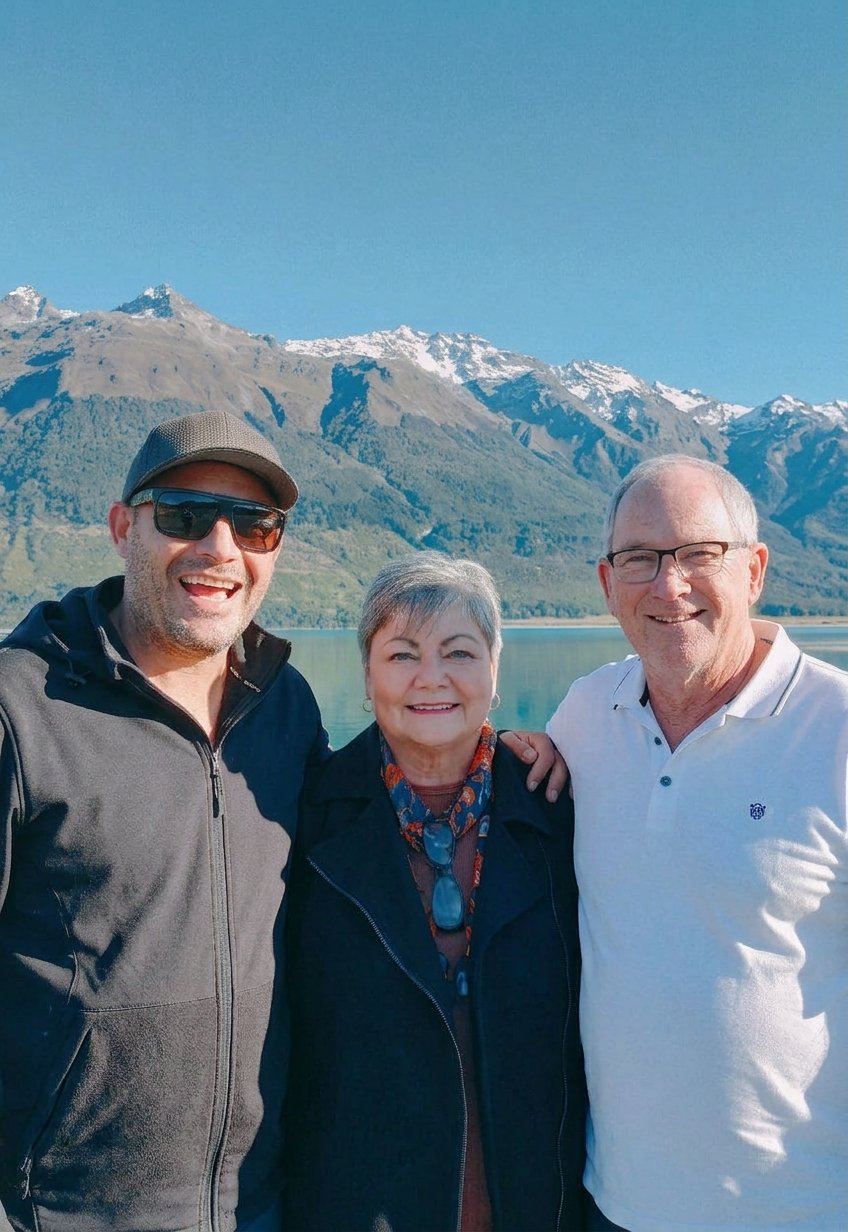
Dave, Kim, and Tim Curran are
New Zealand self-drive holiday specialists with a strong Queenstown focus. For
20+ years, they have been helping travellers plan bespoke New Zealand
self-drive itineraries. Vacation Queenstown also offers visitors a unique trip
planner to help them build their own New Zealand self-drive adventure. Dave is
recognised by Tourism New Zealand as an Advanced Specialist. They love
exploring New Zealand and helping others create their own adventure.