Come and see the amazing Aurora Australis
The Aurora Australis, also known as the "Southern Lights", is an amazing natural occurrence, which delights star gazers in southern New Zealand.
The night sky comes to life as these enchanting lights dance and shimmy their way along the horizon, in a mesmerizing display that leaves many observers almost speechless.
There's lots of great information on this page, but If you can't wait to learn more, just head to our FAQ section.

But what is the Aurora Australis?
The Aurora Australis, or Southern Lights, are caused when electrically charged particles from the sun are trapped by the Earth’s atmosphere.
The resulting light show has to be one of the most memorable natural spectacles on Earth.
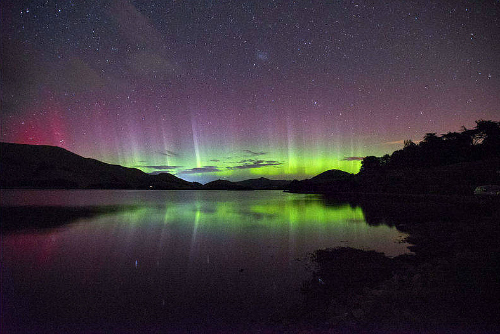
But are they as good as the Northern Lights?
The famous Aurora Borealis, or Northern Lights, are well known throughout the world. But according to astronomer, Dr. Ian Griffin, from the Otago University in Dunedin, their Southern cousin is no less spectacular.
Having seen the Southern Lights more than one hundred and fifty times, Dr. Griffin credits New Zealand's southern location and lack of "pollution" from artificial light as major reasons for the clarity of the local display.
And because of the relatively easy access available, Aurora Australis should be on your "to do" list if you are visiting southern New Zealand.
Dr. Griffin is Director of the Otago Museum, home to its own planetarium.
What is the best time to see the Aurora Australis?
The best viewing months are March and September.
June and July are also a good time to see them, and in fact they can be viewed, with varying degrees of success, throughout the year.
But if you want to maximize your chances, plan for March and September.
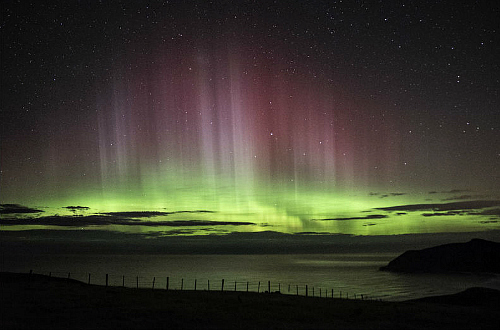
What time of night is best?
It's recommended that you be ready from around an hour after sunset. However the lights display in varying ways throughout the night, so the longer you stay, the more you are likely to see.
Where are the best viewing spots in New Zealand?
Although the lights can sometimes be seen from Wellington and Auckland on the North Island, the further south that you travel, the better your chances.
So the South Island usually provides a better display, and in particular, the Otago Peninsula near Dunedin, is a prime viewing spot.
Dr. Griffin recommends the Hoopers and Papanui Inlet (about twenty five minutes drive from central Dunedin) as prime viewing spots.
The coastal road south of Brighton,
Tunnel Beach (about ten minutes from the Dunedin CBD), and Sandfly Bay
(twenty minutes drive) are also very good spots.
Is there any difference between viewing the lights with a camera as opposed to viewing them with the naked eye?
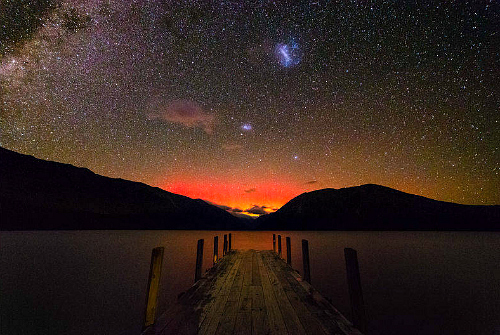
Your camera is capable of capturing much more light than your eye, so any photos will contain much more detail than what you can see with the naked eye.
But because this is such an amazing spectacle, remember to take the time to put your camera down, and check out the lights "unassisted".
To allow your eyes time to adjust to the light, make sure that you arrive at your viewing point 20-30 minutes ahead of time.
And if you plan on taking some pictures, it's recommended that you include some water into your shot to capture any reflections on show.
Dark Sky Places
The Aurora Australis is not the only heavenly attraction here in New Zealand.
Because of our perfect viewing conditions, New Zealand has also been accredited as an official home to several Dark Sky places.
Dunedin sits roughly in the middle of two of these (the Mackenzie Basin and Stewart Island), so why not include all three in your South Island star gazing holiday?
You can learn more about these special Dark Sky places here.
Where are Dunedin and the Otago Peninsula?
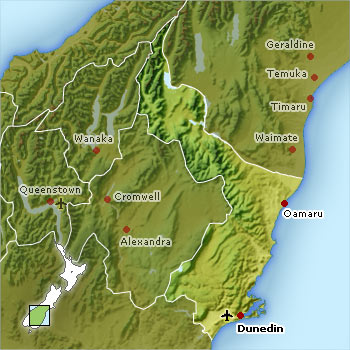
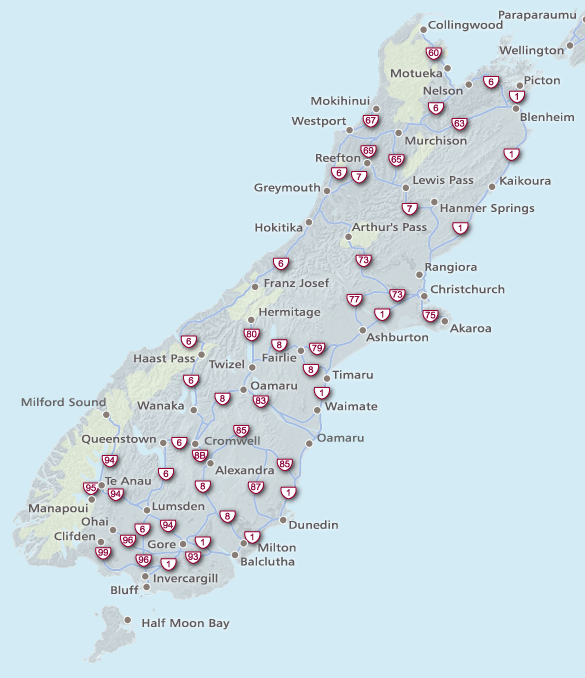
Dunedin and the Otago Peninsula are located on the south-eastern coast of New Zealand's beautiful South Island - refer to the map below.
How do I get there?
By Air
Flights to and from Dunedin airport are available from many of New Zealand's larger cities such as Wellington, Auckland, and Christchurch.
And at the time of writing, direct flights were also available between Dunedin and Brisbane, Australia.
Further information can be found on the Dunedin Airport website here.
The main international airport on the South Island is located in Christchurch. You can find more information at their website here.
Queenstown Airport also hosts flights from several Australian ports. Their website can be viewed here.
By Car
Approximate driving times to Dunedin from the major centers are as follows:
Christchurch to Dunedin 3.5 hours 361 kilometers via State Highway 1
Queenstown to Dunedin 3.5 hours 282 kilometers via State Highway 8
Please see our State Highways map for more information.
Aurora Australis FAQs
What you’re seeing (in simple terms)
The sun constantly sends out streams of tiny, charged particles. Every so often, a stronger gust reaches Earth. Our planet’s magnetic field guides those particles toward the polar regions, where they bump into gases high in the atmosphere. Those collisions release light—most often green, sometimes red or purple—like a natural neon sign. In the south, we call it the Aurora Australis.
When you’re most likely to see it
- Season: You can see the aurora any time of year, but your odds improve during the long, dark nights of autumn and winter (roughly April through September). Activity often peaks around the equinox months (March and September).
- Time of night: From full darkness through the small hours, with a sweet spot often between 10 pm and 2 am. It can flare earlier or later—stay flexible.
- Sky conditions: Darkness and clarity are everything. Choose a night with little or no moon, minimal light pollution, and a clear forecast.
- Solar cycle: We’re near the high point of the sun’s roughly 11-year activity cycle in 2024–2025, which generally means more frequent auroras. Still, it’s never guaranteed.
- Quick rule of thumb: On the South Island, moderate space-weather activity can be enough. In the lower North Island, you’ll usually need a stronger event. Aurora apps and local alert groups are excellent for real-time heads-up.
Best viewing spots in New Zealand
Head as far south, as dark, and as “open to the south” as you can. These tried-and-true locations give you a fighting chance.
Southland and Stewart Island/Rakiura
- Stewart Island/Rakiura: The name Rakiura means “glowing skies”—that’s how good it can be. Around Oban, try dark beaches and headlands such as Ackers Point or Mason Bay (for the dedicated). You’ll need to plan transport and tides.
- Invercargill and surrounds: Oreti Beach, Sandy Point, and Omaui give broad southern horizons without much light.
- Riverton and Colac Bay: West-facing beaches with big skies; look low to the south.
The Catlins
- Nugget Point Lighthouse: Famous southern outlook and dramatic setting. Go prepared for wind and take care on the track after dark.
- Curio Bay and Waipapa Point: Long, dark coastlines ideal for low-south aurora arcs.
Dunedin and Otago Coast
- Otago Peninsula: High vantage points with clear southern views; check places like Hoopers Inlet or Sandfly Bay area pull-offs.
- Aramoana and Long Beach: Popular with local aurora chasers—watch surf and swell.
- St Clair/Blackhead area: Easy access; walk a short distance to escape street lighting.
Aoraki Mackenzie Dark Sky Region
- Lake Tekapo and Lake Pukaki: World-class dark skies. Use lake shores that face south; avoid pointing toward town lights.
- Around Twizel and Lake Ruataniwha: Flat horizons and very little glow.
- (Note: Mt John summit is an active observatory—access at night is restricted unless you’re on a tour. Great views are still available from the lakes and pull-offs below.)
Queenstown–Wānaka–Fiordland
- Queenstown: Leave town lights behind—try Moke Lake, Bob’s Cove, or the road to Glenorchy (safe pull-offs only).
- Wānaka: Eely Point, Glendhu Bay, or open lakefront with a clear southern aspect.
- Te Anau and Manapouri: Lakeside spots with dark southern views; mountains can frame the display beautifully.
Canterbury and Wellington (for stronger events)
- Birdlings Flat (Canterbury): A local favorite for its big, dark southern horizon.
- Kaitorete Spit and Lake Ellesmere/Te Waihora edges: Flat, open, and dark.
- Wellington South Coast: On rarer, stronger storms, try Breaker Bay, Princess Bay, Red Rocks, or Pencarrow. Expect crowds and wind.
Wairarapa and the lower North Island (occasionally)
- Cape Palliser, Ngawi, Lake Ferry, and Castlepoint: When the aurora is strong, these coastal spots can deliver. Face south and keep expectations modest.
How to watch (and what to expect)
- Face south and look low: Early stages often appear as a faint, greyish arc or a soft “glow” hugging the horizon. Don’t expect vivid color immediately—your camera usually sees it before your eyes do.
- Be patient: Displays can surge and fade over minutes or hours. Give it time.
- Let your eyes adjust: 20–30 minutes without white light makes a big difference. Use a red light if you have one.
Light-touch planning checklist
- Weather: Clear, cold nights are best. Check a local forecast for cloud cover and wind.
- Moon phase: Aim for new moon or when the moon sets early.
- Darkness: Get away from towns and streetlights.
- Alerts: Use an aurora app or a reputable space-weather site for real-time tips. As a simple guide, “strong activity alerts” usually mean it’s worth heading out on the South Island, and lower North Island needs the stronger ones.
- Safety: Dress warmly, bring a thermos and layers, and watch coastal hazards, cliffs, and tides. Park legally and consider gravel roads carefully.
A few friendly photo tips
- Tripod and long exposures help. Start around ISO 1600–3200, 5–15 seconds, wide aperture.
- Manual focus to infinity on a bright star or distant light, then recompose.
- Shoot RAW if you can. Turn off flash. Keep spare batteries warm.
A last word
Aurora-chasing is a mix of science, weather-watching, and a little luck. Some nights you’ll get a subtle glow; other nights, curtains of green and pink will dance across the whole sky. Either way, the quiet of a New Zealand night, a cup of something hot, and the hush that falls when the first arc appears—that’s the real magic.
May the southern skies treat you kindly.
What else is there to see and do on the Otago Peninsula?
The Otago Peninsula is a nature lover's paradise, and is home to a wide array of wildlife including dolphins, seals, penguins, and many species of rare birds.
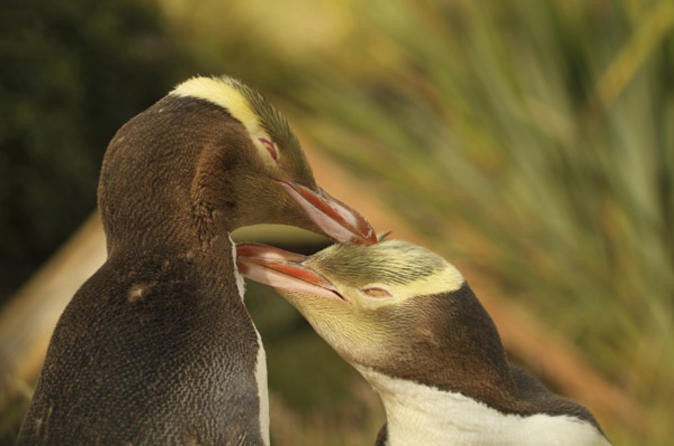
Nature tours are very popular and the Dunedin and Otago Peninsula Wildlife Tour is one of the most popular. In addition to seeing the sights in Dunedin, the tour takes you to see the yellow eyed penguin, and the royal albatross colony. Highly recommended.
Dunedin is a thriving coastal city of some 125,000 residents, and is home to New Zealand's largest university, the University of Otago.
With a strong Scottish heritage, Dunedin has some wonderful architectural highlights including Larnach Castle and the Dunedin Railway Station.
The Taieri Gorge Railway and the Otago Museum are also very popular attractions.
Come and visit the Otago Peninsula
This stunning part of New Zealand won't disappoint, so come and see it for yourself.
And if you have any questions at all please don't hesitate to contact us.
Map
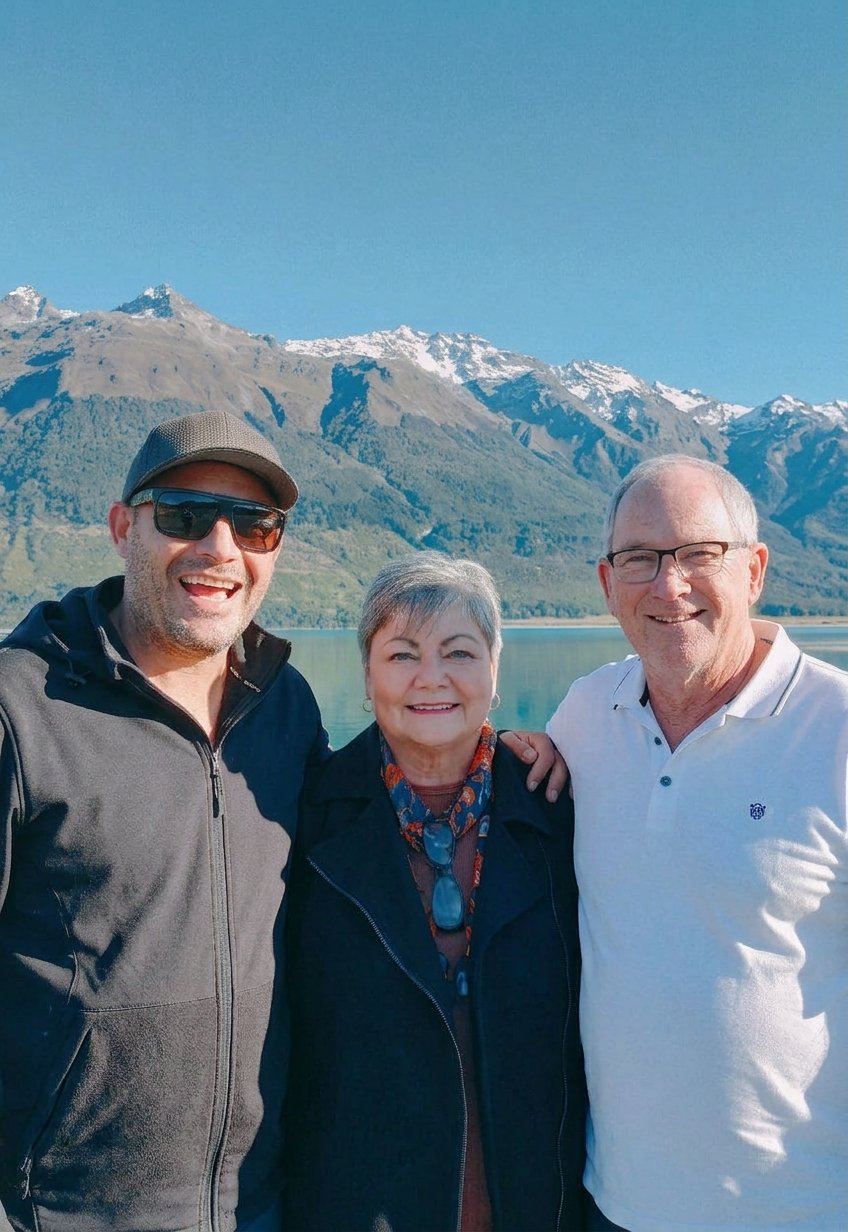
Dave, Kim, and Tim Curran are New Zealand self-drive holiday specialists with a strong Queenstown focus. For 20+ years, they have been helping travellers plan bespoke New Zealand self-drive itineraries. Vacation Queenstown also offers visitors a unique trip planner to help them build their own New Zealand self-drive adventure. Dave is recognised by Tourism New Zealand as an Advanced Specialist. They love exploring New Zealand and helping others create their own adventure.
