Welcome to aoraki mount cook national park
Aoraki Mount Cook National Park is a place that always fills us with joy, and is an unforgettable highlight for any South Island itinerary.
Picture snow‑capped peaks, turquoise lakes, star‑filled skies, and accessible walking tracks, and you have a very special destination indeed.
The
images below will give you a feel for why this region steals our heart,
and there's a good chance you will also be blown away by the scenery
here.
To help you plan your trip, we've compiled this guide, packed with information about:
- Our favourite things to see and do.
- Accommodation options.
- Facilities in the village.
- Seasonal highlights.
- Tips to help you build your perfect adventure.
Enjoy!
Where Is Aoraki Mount Cook National Park?
Aoraki Mount Cook National Park lies in the central South Island of New Zealand, within the wider Mackenzie Region.
- Nearest towns: Twizel (about 1 hour’s drive), and Lake Tekapo village (around 1.25 hour's drive).
- From Christchurch: 4 hours by car.
- From Queenstown: 3.5 hours by car via Lindis Pass.
- Access road: State Highway 8 to Lake Pukaki, then State Highway 80 (Mount Cook Road) along the lake to Aoraki / Mount Cook Village.
- If you are travelling from Christchurch to Queenstown it's the perfect place to stop for the night and break up the drive.
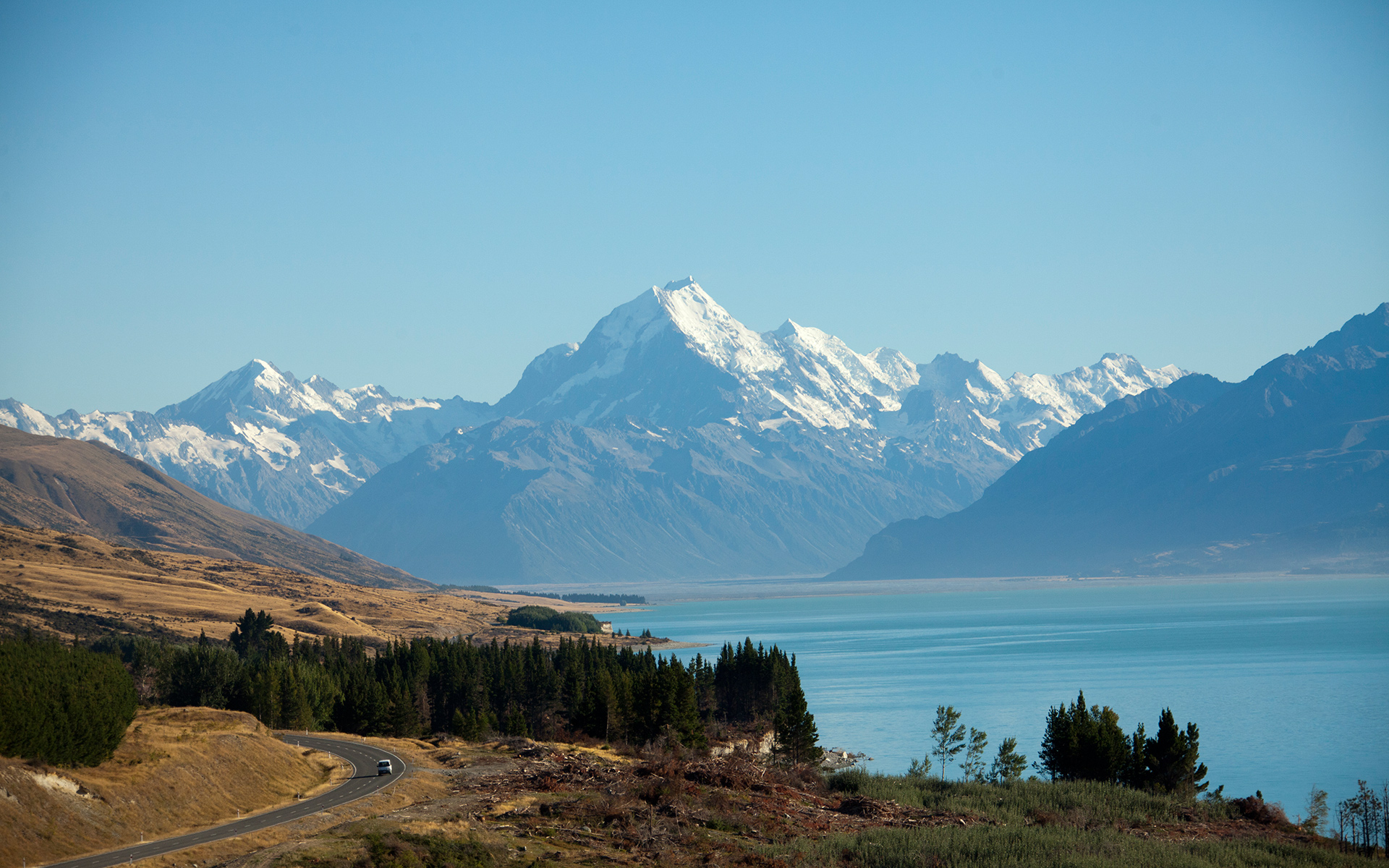
The drive in is part of the experience, and the majesty of this park never ceases to amaze us. Mount Cook Road runs along the edge of Lake Pukaki, with its famous glacier fed milky‑turquoise colour, and the constant backdrop of the snow‑covered Southern Alps.
Frequent stops punctuate our drive just so we can take it all in. It really is that good.
What Makes Aoraki Mount Cook so Special?
It's easy to just say "the scenery". But Aoraki Mount Cook National Park is also a UNESCO World Heritage area and home to:
- Aoraki / Mount Cook – New Zealand’s highest mountain at 3,724 m (12,218 ft).
- 19 peaks over 3,000 m.
- Huge glaciers – including the 27 km long Tasman Glacier.
- Remarkably accessible alpine scenery – many short walks start almost at road level.
- Clear dark skies for unpolluted star gazing – part of the Aoraki Mackenzie International Dark Sky Reserve.
We love how we can just step out of our accommodation and be on a world‑class walking track within minutes.
History
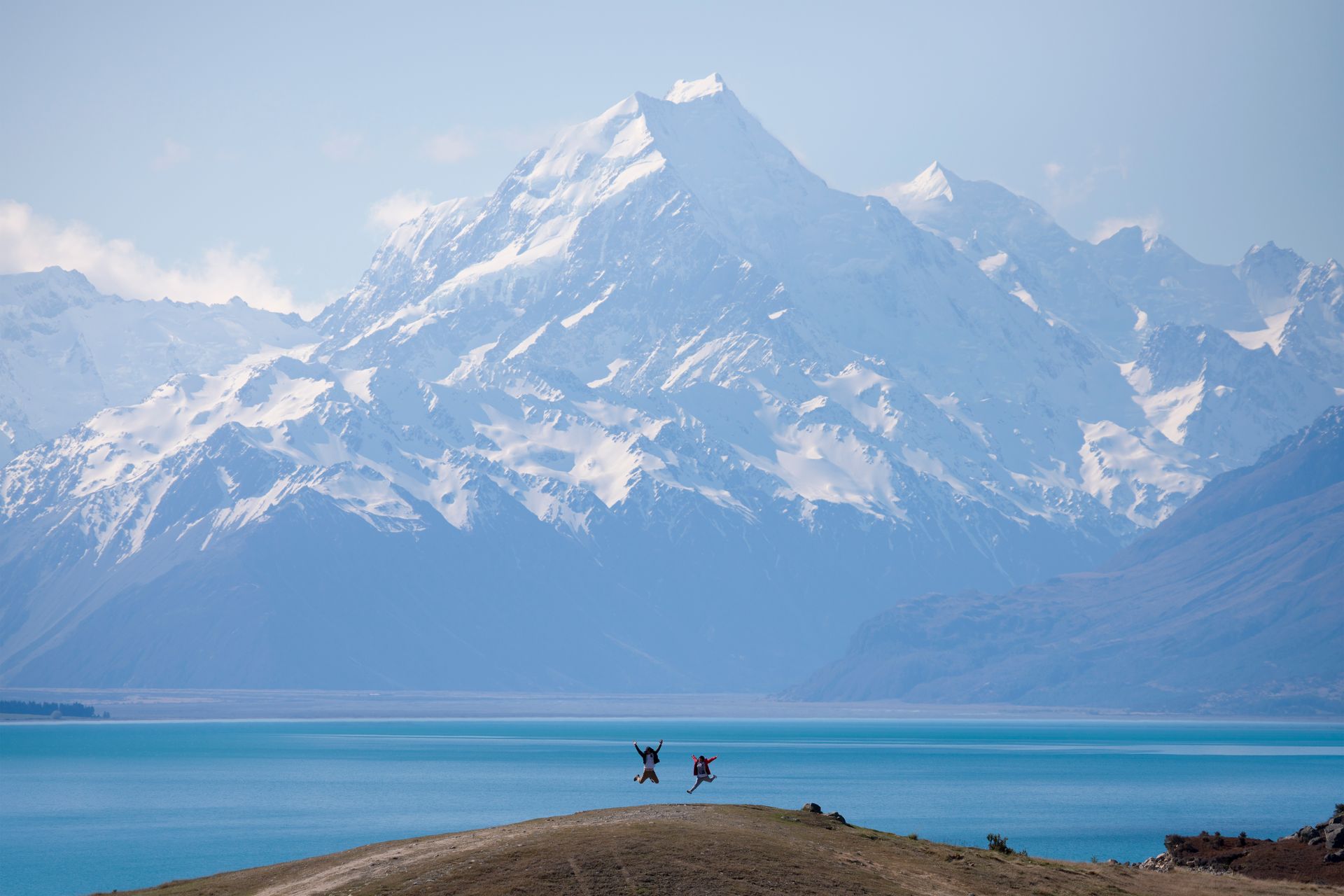
Aoraki Mount Cook National Park's history bears an important significance to the Māori people. Aoraki means "Cloud Piercer", and in legend, the mountain was created when Aoraki, a figure from a canoe (waka), was turned to stone, and became the mountain.
In 1851, the mountain was named by European explorer John Lort Stokes, after Captain James Cook. It became a major mountaineering hub after the first ascent in 1894, and gained global fame through the exploits of Kiwi legend Sir Edmund Hillary, who along with his Sherpa Tenzing Norgay, were the first people to reach the summit of Mount Everest.
Aoraki Mount Cook National Park was established as part of the Te Wahipounamu World Heritage Site in 1990, and through the Ngāi Tahu Claims Settlement Act 1998, received dual naming, linking its deep Māori roots with modern conservation.
Importantly, the recognition and placement of "Aoraki" before "Mount Cook" in the name, signifies the spiritual significance of the mountain.
Top Things to See and Do
Walking & Hiking (or "tramping" as we know it)
You don’t need to
be a mountaineer to enjoy the park. Several well‑maintained tracks offer
big views for relatively modest effort.
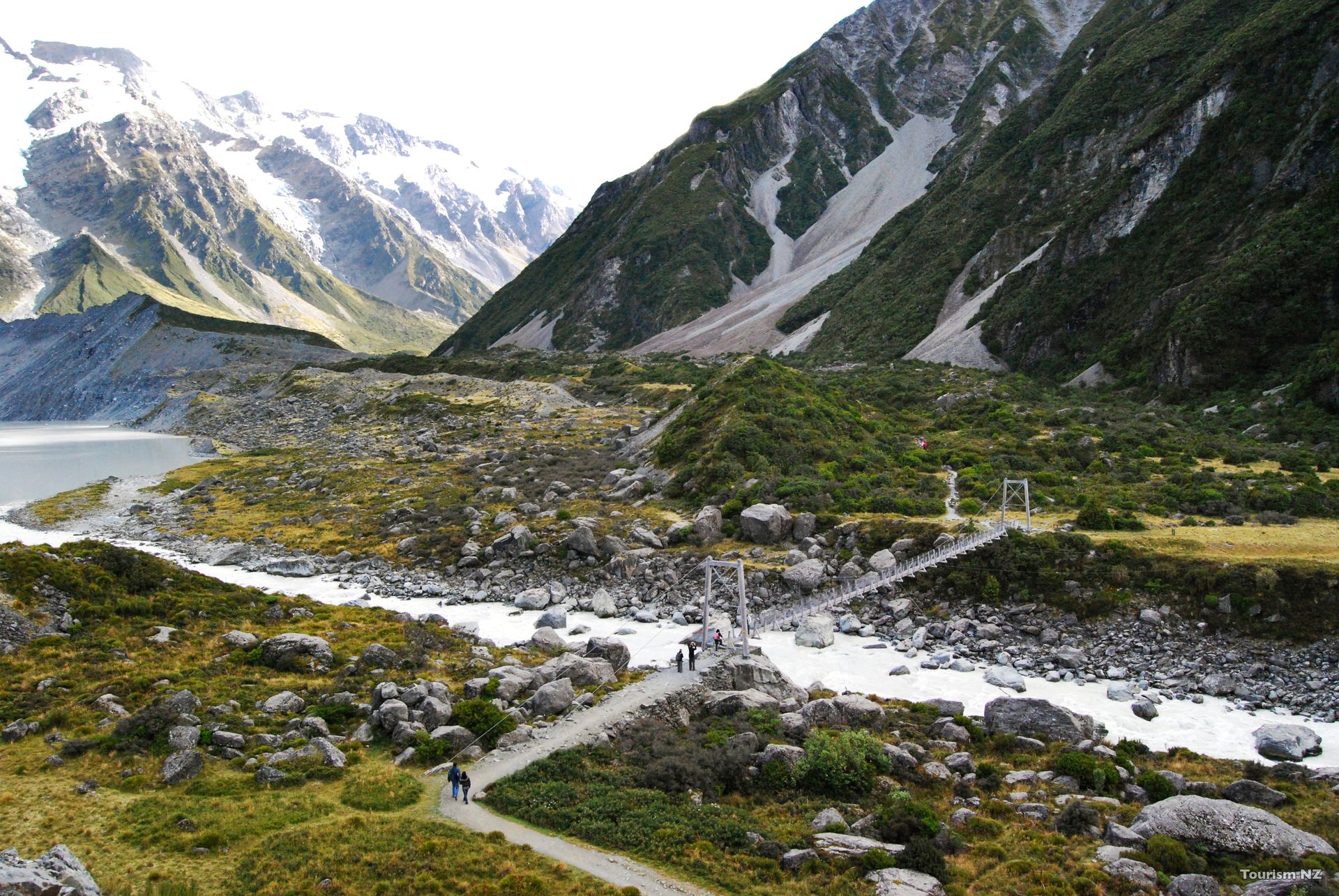
Hooker Valley Track (Most Popular Walk)
- Time: 3 hours return (allow 4 if you start from the village).
- Difficulty: Easy, mostly flat, well‑formed gravel track.
- Highlights:
- Three swing bridges over a glacier‑fed river. Access is currently allowed only to the first bridge as a new bridge is constructed.
- Views of Mueller Glacier lake and moraine.
- Panoramic viewpoint at Hooker Lake with Aoraki / Mount Cook in front.
- Best for: First‑time visitors, families, photographers.
Tasman Glacier View & Blue Lakes
- Tasman Glacier Viewpoint.
- Time: 40–60 minutes return.
- Track: Steps up to a lookout.
- View: Tasman Glacier lake with icebergs, terminal face of the glacier, surrounding peaks.
Blue Lakes (Green in reality!)
- Small additional track from the same car park.
- Short, easy walk for a different vantage point.
Kea Point Track
- Time: 2 hours return from village, 1 hr return from White Horse Hill campground.
- View: Look across to Mueller Glacier lake and the Mount Sefton ridge.
- Great “short version” if you don’t have time for Hooker Valley.
Red Tarns Track
- Time: 2 hours return.
- Difficulty: Steep steps, good fitness needed.
- Reward: Elevated views of Aoraki / Mount Cook and the village; beautiful reflections in the tarns.
More Information - the Department of Conservation (DOC) are the local experts and have "mountains" of information available here. In the search box select "Canterbury" as the region then "Aoraki/Mount Cook National Park" as the place. You can then filter the results by duration and difficulty.
You can also find lots more information on the DOC Visitor Centre website here.
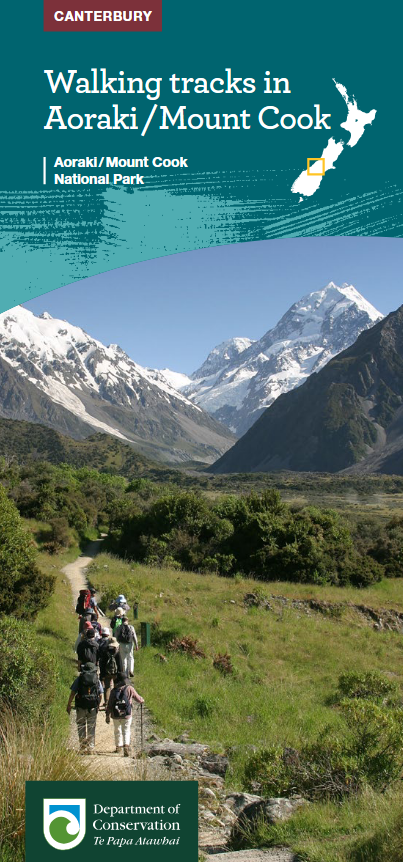
They also offer a free brochure which you can download here.
Scenic Flights & Heli‑Hikes
For many visitors to Aoraki Mount Cook National Park, a scenic flight is the ultimate highlight. The experience of the Southern Alps unfolding below is something that you will never forget.
The difficult part is deciding what type of flight to take:
- Fixed‑wing flights: Take off from Aoraki Mount Cook Airport and give sweeping views over the Southern Alps, Tasman Glacier, and West Coast glaciers.
- Helicopter flights: Often include a snow landing on a glacier. You step out into a world of ice and silence. This is one of our all time favourite activities. The sense of isolation is something that always amazes us.
- Heli‑hikes: Combine a scenic flight with a guided walk on the glacier itself (crampons and gear provided).
- We haven't tried it, but people tell us that a tandem skydive over Aoraki Mount Cook National Park is something to be remembered.
What can you expect to see:
- The full breadth of the Southern Alps. If you had any preconceived ideas about New Zealand being a small country, this may change your mind.
- Crevasses, seracs, and icefalls up close.
- Tasman, Franz Josef, and Fox glaciers on longer flights.
Tip: The weather here can change rapidly. Try to schedule scenic flights early in your stay so you can move them if conditions close in.
Here's a selection of some popular highly rated scenic flights
Glacier Boat Tours & Activities
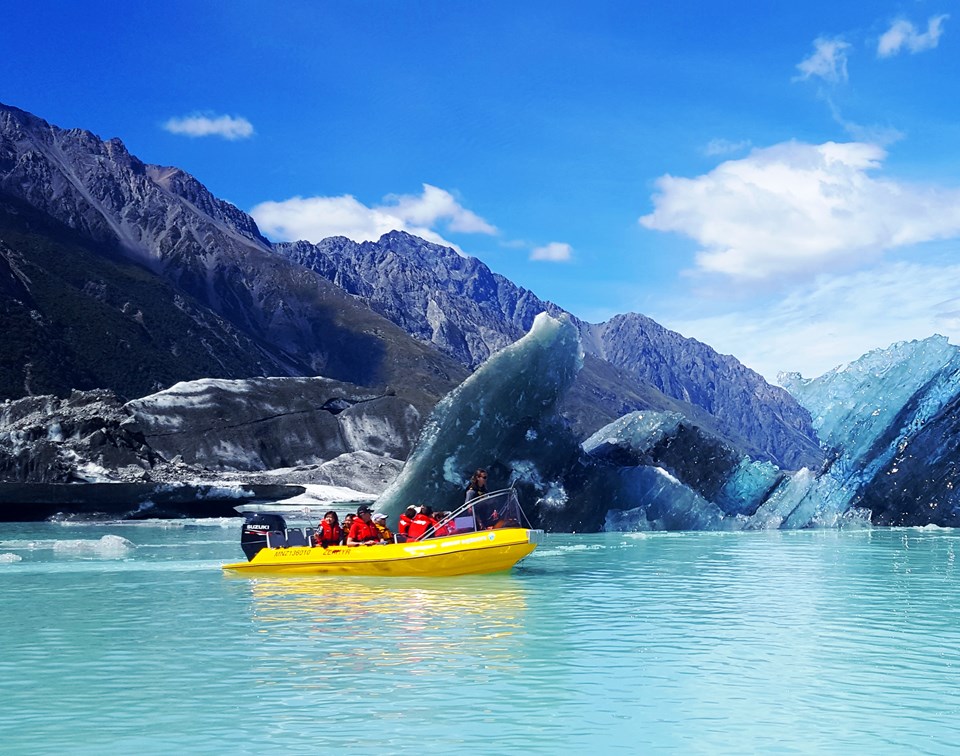
The Glacier Explorer's Tour is one of those iconic New Zealand activities that you will still be talking about long after returning home.
Operating on the Tasman Glacier terminal lake, this tour takes you right up close to floating icebergs (see the amazing image below)!
- Up close views of the glacier’s terminal face.
- Hear commentary about how the glacier is retreating and how the landscape has changed.
- Suitable for most ages, however you must be fit enough for the 1.5 kilometre walk to and from the lake.
- Family passes available.
- Refundable if cancelled due to the weather.
The tour does not operate during winter (June, July, August).
The Hermitage Hotel & Its Attractions
The Hermitage Hotel is the landmark property in Aoraki Mount Cook Village and a central hub for many activities.
The Hermitage is not just somewhere to stay, it's also home to several key attractions including:
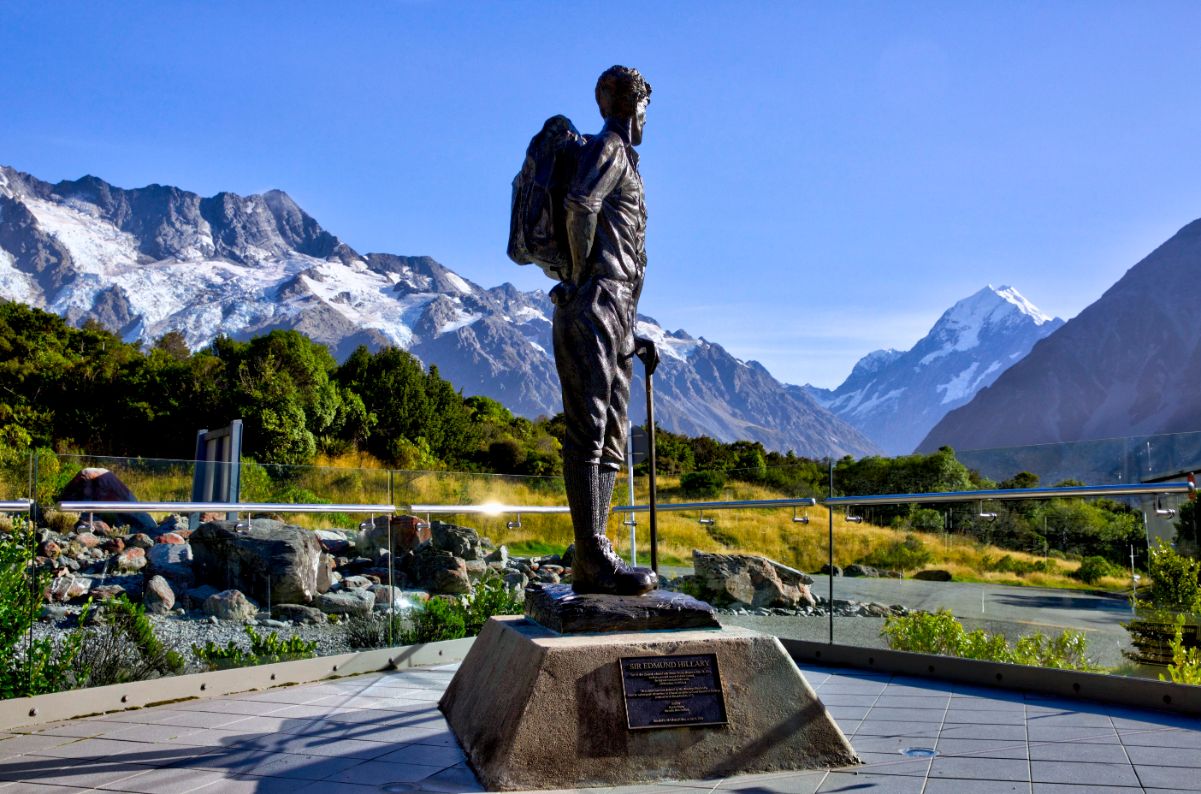
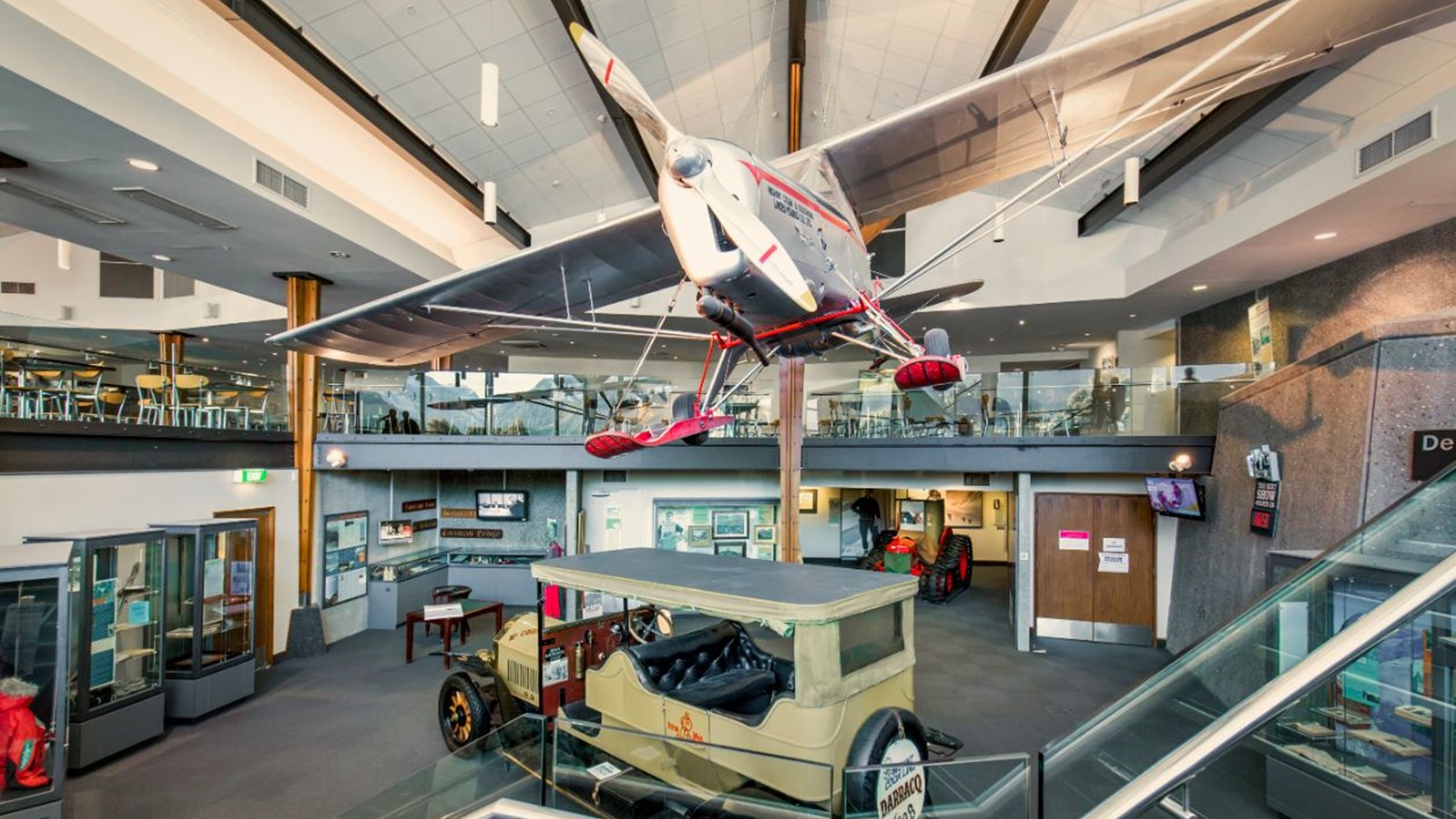
Sir Edmund Hillary Alpine Centre
A small but excellent complex celebrating:
- Sir Edmund Hillary’s life and climbing achievements.
- The history of mountaineering in the region.
- The development of Aoraki / Mount Cook as an alpine destination.
- Museum exhibits – gear, photos, stories from early climbers and guides.
- 3D cinema / theatre – films about the region, mountaineering, and the night sky.
Planetarium & Stargazing
As part of the wider Aoraki Mackenzie Dark Sky Reserve, the Hermitage often offers:
- Guided "Big Sky Stargazing" tours (sometimes with transport to darker viewing sites).
- Indoor planetarium shows – great backup option if the weather is cloudy, where you'll learn about southern hemisphere constellations, Māori star lore and cultural perspectives, and how and why the region protects its dark skies.
Dining & Lounges
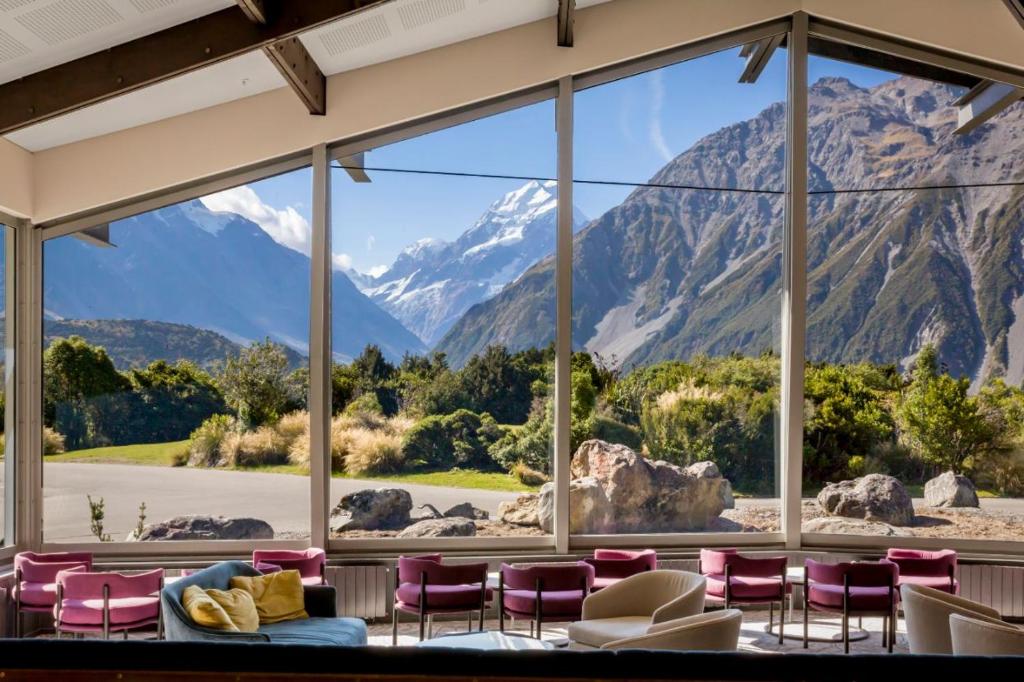
- Large picture windows with direct views of Aoraki / Mount Cook and surrounding peaks.
- Restaurant, café, and bar options (specific venues can vary over time). We loved the evening buffet.
- A comfortable option if the weather is poor and you still want to enjoy the alpine views.
- You may be able to book an accommodation package that includes dining options.
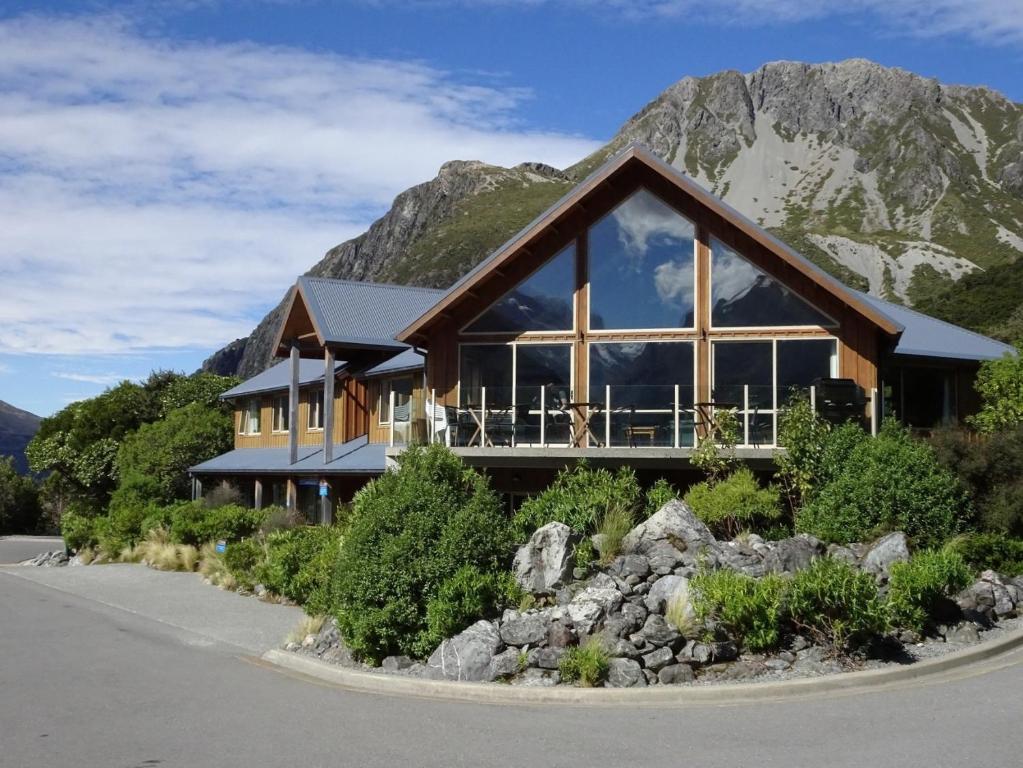
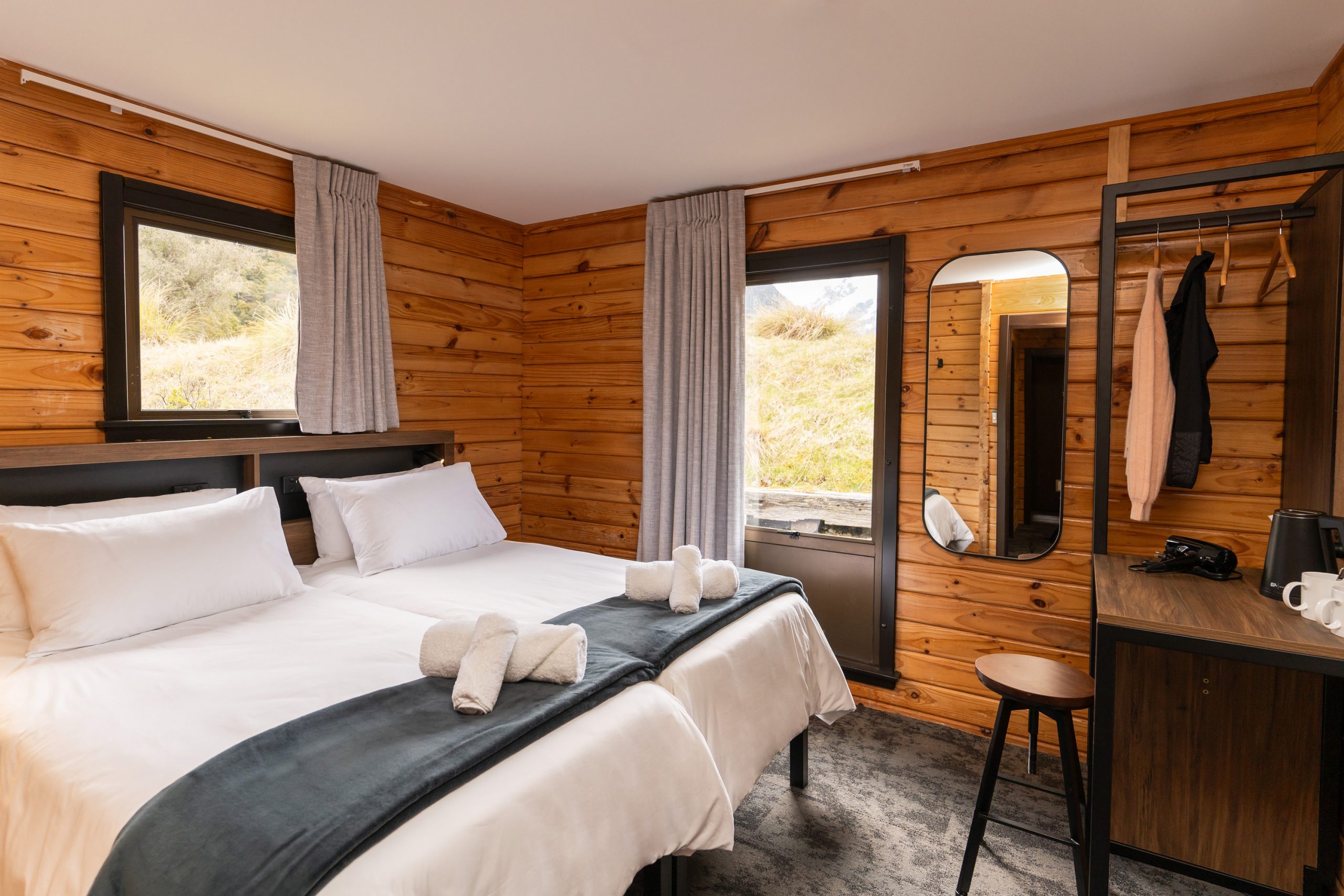
Accommodation Options in Aoraki Mount Cook Village
The
village is small but offers a limited range of accommodation choices. Experience has taught us that booking ahead is
essential in peak season (Nov–Mar) and during holiday periods.
Hotels
The iconic Hermitage Hotel
- One of our all time favourites. A simply stunning location.
- Full‑service hotel with a wide choice of room types.
- Some rooms have direct mountain views, and if the budget allows, don't pass up the opportunity to book one of these.
- Onsite restaurants, bar, and activity booking desk.
- Can be expensive.
Motels & Lodges
You can choose from the Mount Cook Lodge and Motels (which has an onsite bar and grill), the Aoraki Court Motel, or the Aoraki Mount Cook Alpine Lodge.
- These offer a range of room types including studio, family and apartment‑style rooms.
- Often include kitchenettes for self‑catering.
Backpackers & Budget Options
Haka House has several hostels around New Zealand, including Aoraki Mount Cook village.
They offer:
- Shared dorms and private rooms.
- Communal kitchens and lounges.
- Good choice for budget travellers and solo visitors.
- A free sauna.
- Secure storage.
- Free wifi.
Holiday Park & Camping
The White Horse Hill Campground is operated by DOC (Department of Conservation) and has:
- Basic but scenic campground at the end of the road near Hooker Valley Track.
- Toilets, water, and simple facilities (no powered sites at last update).
- Incredible starry nights and close proximity to popular trails.
Powered sites / more facilities
Limited options in the village area, so basing yourself in Twizel or Lake Tekapo will be a better option if you want fully‑equipped holiday parks and are happy to drive in for day visits.
The towns of Twizel and Tekapo offer a wider range of accommodation if needed.

Facilities within Aoraki Mount Cook village
Facilities here are a little underwhelming (unlike the scenery). Here's a summary of what's available:
The Visitor centre (DOC – Department of Conservation)
- Up‑to‑date track and weather information.
- Safety advice, maps, and interpretive displays.
- Information on local flora, fauna, geology, and cultural history.
- Bookings for camp sites.
Cafés, bars and restaurants
- The Old Mountaineers Cafe Bar and Restaurant.
- The Hermitage has several options including the Chamois Bar, the Panorama Room, the Alpine Restaurant, and the Sir Edmund Haillary Cafe and Bar.
- Opening hours can be seasonal, so check ahead in winter.
Small shops/takeaway food
- Very limited, with drinks and snacks at the Hermitage convenience store. There are no supermarkets in the village so please stock up in Tekapo or Twizel.
- Outdoor gear essentials like rain jackets or gas canisters may be available, but don’t rely on full outfitting here—bring what you need.
Fuel
- Availability is limited to a self serv pump, but supplies can be unreliable and expensive.
- It's wise to fill up in Twizel or Tekapo before driving in.
Parking
- Free parking in the village and at major trailheads (can get busy at peak periods—arrive early for Hooker Valley.
ATM/Banking
- There are no ATMs or banking facilities withing the village.
Seasonal Highlights: When's the best time to Visit Aoraki Mount Cook National Park?
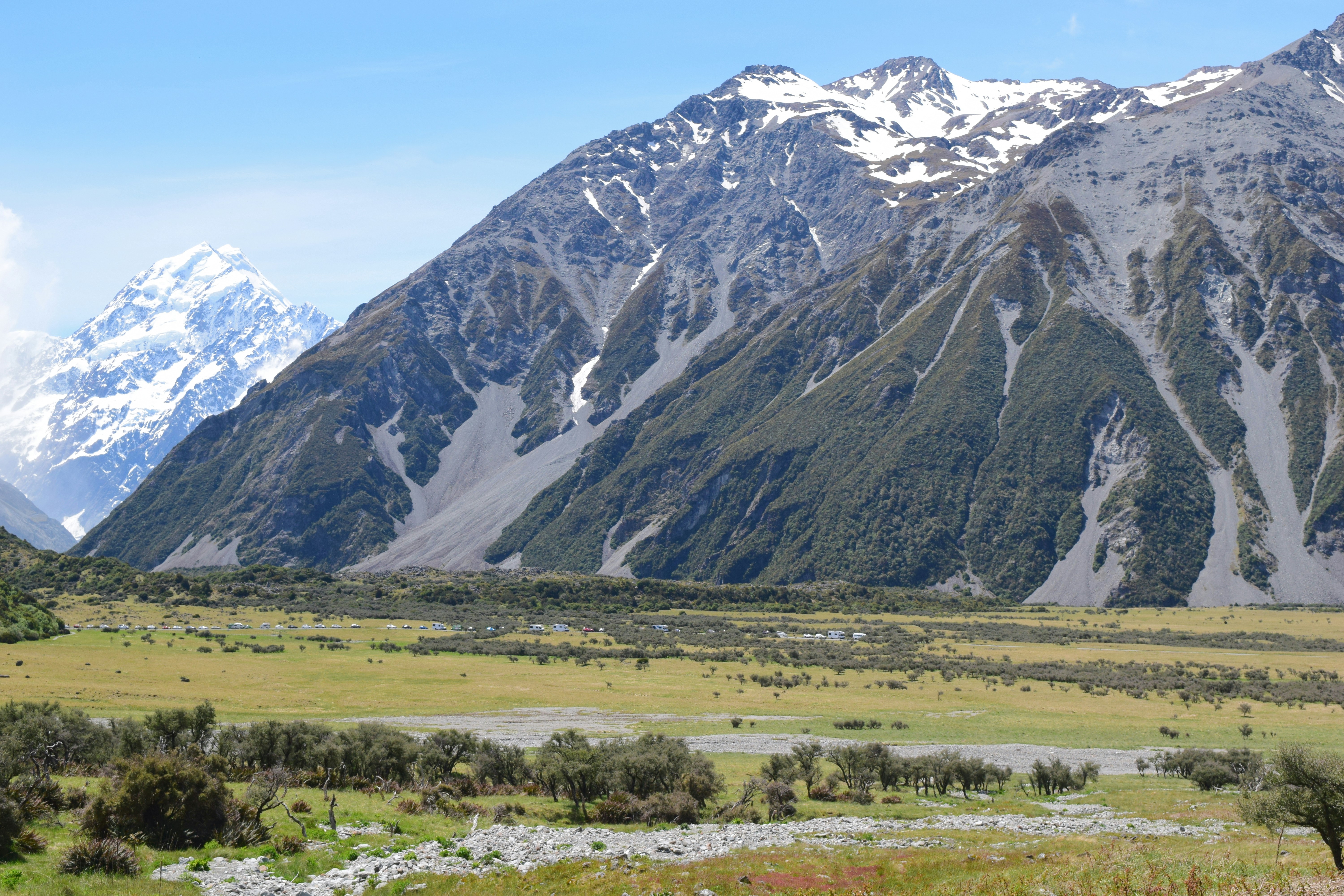
Aoraki Mount Cook National Park is a true year‑round destination, but we've found that the experience changes dramatically with the seasons. We can't recommend a single “best” time, because it depends on what kind of experience you are looking for.
Here's a snapshot:
Spring (September–November)
- Snow still on the peaks; valley tracks often clear.
- Longer daylight hours returning.
- Crisp, clear days.
- Fewer crowds than high summer.
- Waterfalls and streams often running full after snow melt.
Summer (December–February)
- Warmest and most stable period overall (though still alpine—layers are essential).
- Peak hiking season – most tracks will be open and dry.
- Blooming alpine wildflowers, like the Mount Cook lily (kōpukupuku) and lupins in the wider region.
- Busiest time for visitors.
- Essential to book accommodation (including campsites) and activities well in advance.
Autumn (March–May)
- Cooler temps, especially mornings and evenings.
- Often very clear, settled weather.
- Golden light and beautiful photography conditions.
- Slightly fewer tourists than mid-summer.
- Good time for walking if you prefer cooler hiking conditions.
Winter (June–August)
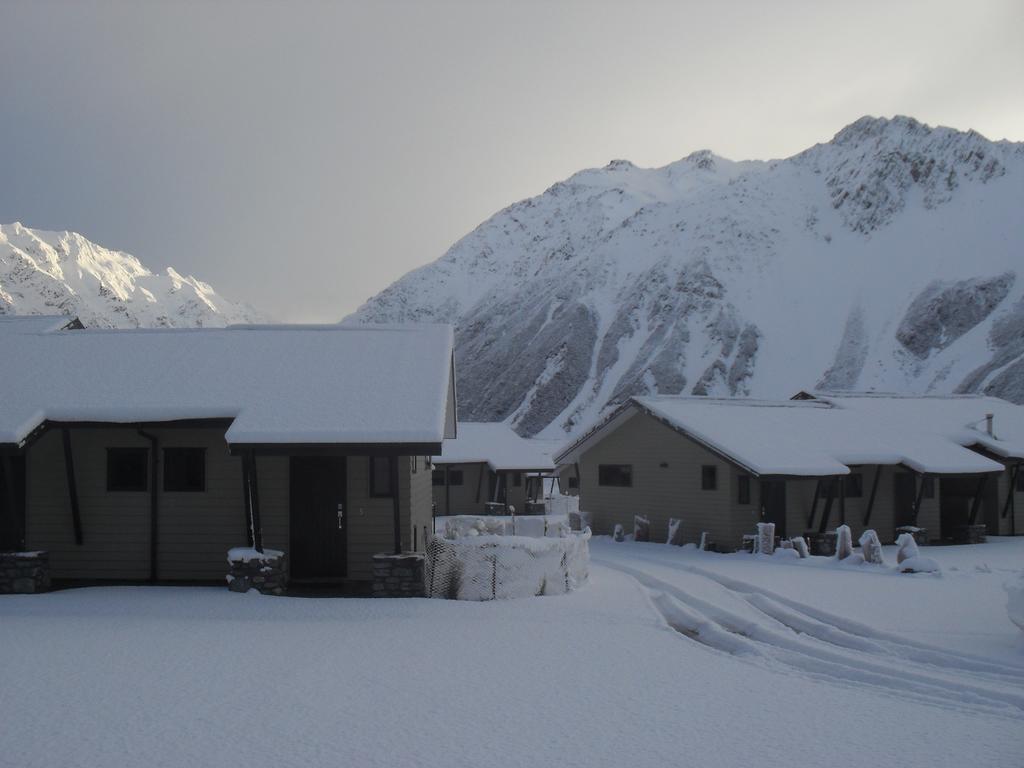
- Cold, with possible snow in the village and on lower trails. We experienced a blizzard here which was followed by a clear sunny sky and stunning views of Aoraki Mount Cook.
- Shorter days; chilly nights.
- Dramatic snowy landscapes.
- Fewer visitors – a quieter, more relaxing experience.
- Excellent stargazing, if skies are clear.
- Some tracks may be icy or affected by avalanche risk. Check conditions with DOC.
- Road conditions can occasionally be disrupted—check forecasts and advisories with the MetService.
- Bring serious cold‑weather gear.
Tips for First‑Time Visitors
Plan for changeable weather
Even in summer, Aoraki can be cloaked in cloud or sudden rain. Build
some flexibility into your itinerary so you can move key activities like
flights or long walks.
Layer your clothing
- Wear a moisture‑wicking base layer.
- Warm mid‑layer (fleece or light down).
- Waterproof, windproof outer shell.
- Sturdy footwear with good grip and ankle support is highly recommended, even for “easy” tracks.
Sun protection is essential
The sun is stronger than you think here, and reflects off snow, rock, and water.
- High‑SPF sunscreen is a must.
- Sunglasses with good UV protection.
- A wide brim hat or cap.
Carry water and snacks
Tracks like Hooker Valley are not difficult, but you’ll want
sustenance. Water sources may not be treated, so we recommend carrying your own (or a
filter).
Please respect the environment
- Stay on marked tracks, pack out all rubbish, and follow DOC signs. The alpine ecosystem is fragile, and weather hazards are real—don’t ignore warnings.
- Do you know about Tiaki?
Give yourself enough time here - build in at least one full day (but preferably two)
We find that many visitors try to squeeze Aoraki Mount Cook into a rushed day trip. If possible:
- Spend one night in the village.
- Aim for two nights if you want to hike, do a flight or tour, and enjoy stargazing without rushing.
Why Aoraki Mount Cook National park Belongs on Your Itinerary
Aoraki Mount Cook National Park blends legendary mountain scenery with genuinely accessible experiences. In a single visit you can:
- Walk to the edge of a glacier‑fed lake, then cruise between icebergs.
- Stand under a sky filled with starry views that few places on Earth can match.
- Learn about Sir Edmund Hillary and New Zealand’s mountaineering heritage.
- Sit in a warm lounge at the Hermitage, coffee or wine in hand, watching the light change on the Southern Alps.
For first‑time visitors to New Zealand, it delivers that “this is why we came” feeling—without requiring technical skills, big budgets, or extreme fitness.
If you love big landscapes, clear air, and the sense of being close to nature’s raw power, Aoraki Mount Cook National Park is one of the most rewarding stops you can make in the South Island.
want to see how you can include aoraki Mt Cook into your road trip plans?
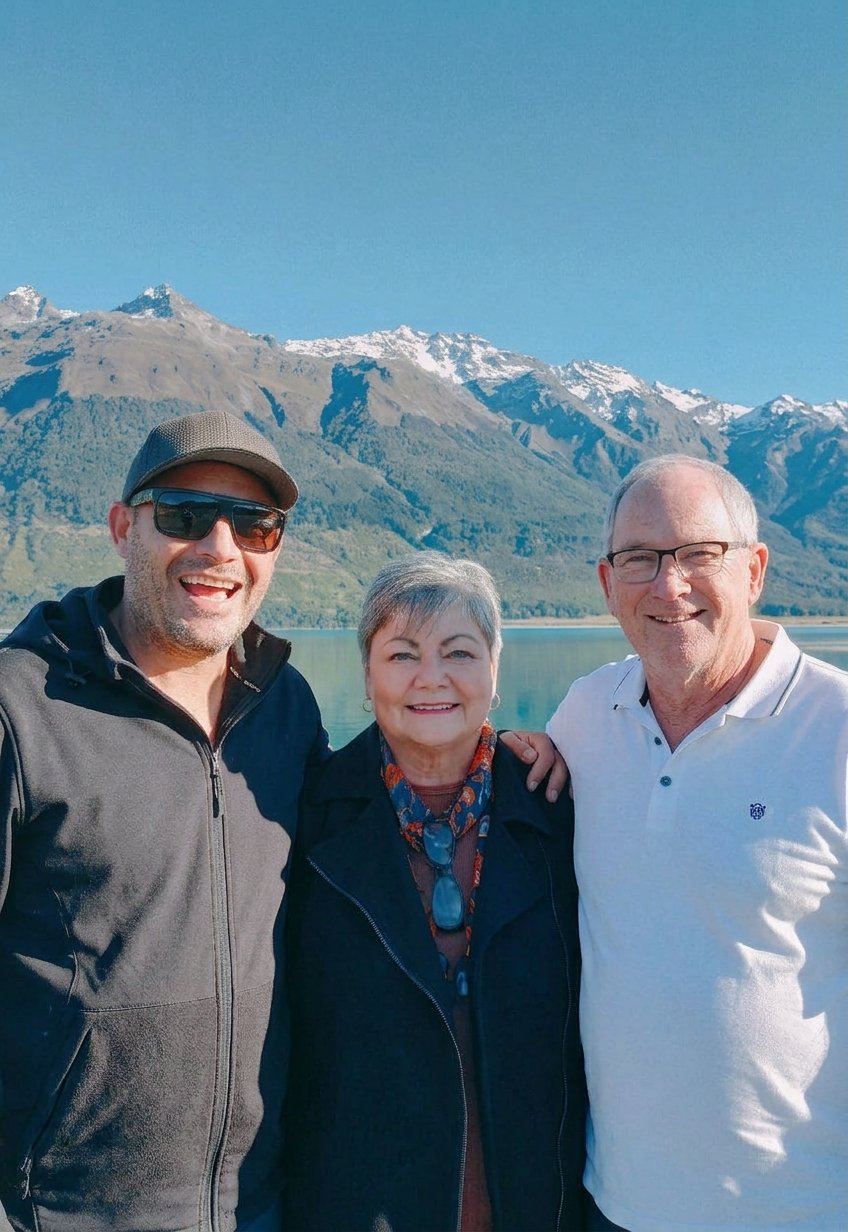
Dave, Kim, and Tim Curran are New Zealand self-drive holiday specialists with a strong Queenstown focus. For 20+ years, they have been helping travellers plan bespoke New Zealand self-drive itineraries. Vacation Queenstown also offers visitors a unique trip planner to help them build their own New Zealand self-drive adventure. Dave is recognised by Tourism New Zealand as an Advanced Specialist. They love exploring New Zealand and helping others create their own adventure.
